Supporting Participants Experiencing Sensory Overload at Large Sporting Events
 Crowded arenas promise joy, noise, and spectacle, but they also ambush nervous systems. Some brains process every sound, light, and movement as urgent, offering no filter, no mercy. That constant assault turns a match into a minefield, especially for autistic people, those with anxiety, PTSD, or migraine conditions. And the usual response from organisers? Turn the volume up further and call it atmosphere. People don’t melt down because they’re fragile; the environment attacks them. So the question isn’t whether sport can stay loud. It’s whether organisers care enough to design safer options for everyone.
Reading the Early Warning Signs
Support starts long before anyone bolts for the exit. The body sends early signals: rigid shoulders, scanning eyes, shallow breathing, flinching at tannoy blasts. And crowds misread those signs as boredom or a bad mood. Staff need training that goes beyond customer service scripts and tidy lanyards. They need real awareness, not just box‑ticked “events staffing” briefings that treat access as a side note. So they watch for hands over ears, sudden silence, or forced jokes after a loud cheer. A short check‑in, offered calmly and without fuss, stops many crises before they erupt and protects everyone nearby.
Designing Calm into Chaotic Spaces
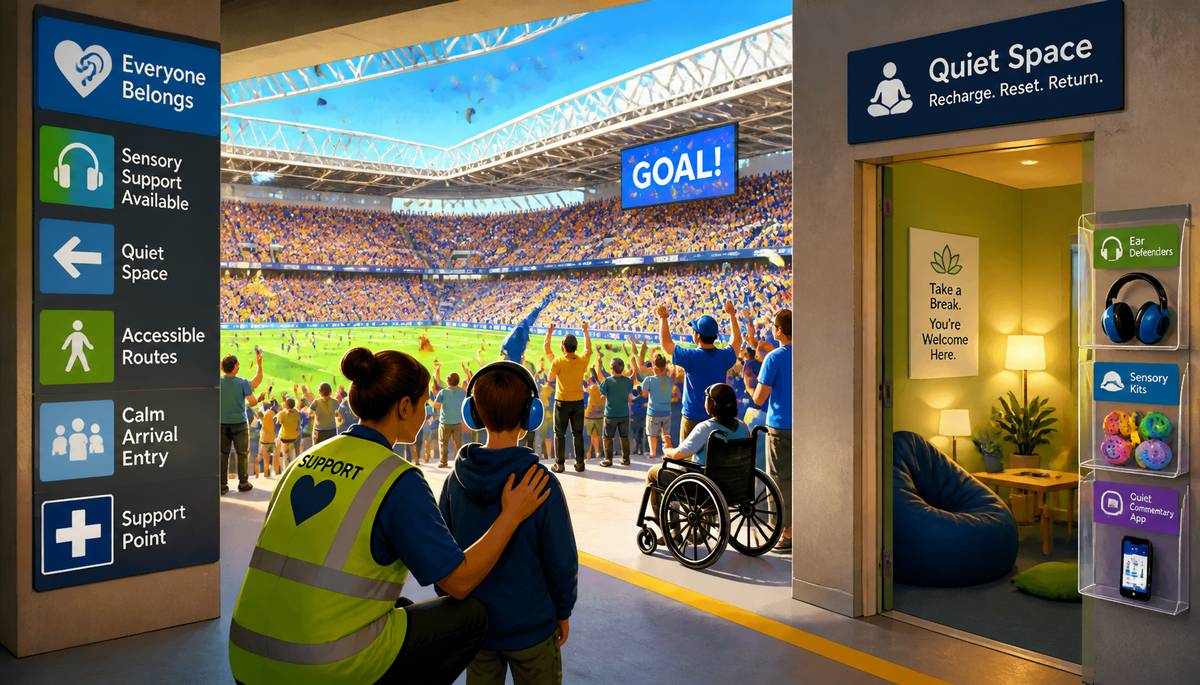
Stadiums love giant screens and explosive sound systems, yet forget a simple, quiet corner. Sensory‑friendly design doesn’t kill the atmosphere; it gives people a way to stay. And it starts with basics: clear signage, neutral‑lit walkways, and predictable routes to seats and exits. So small changes matter. Softer lighting near concessions, fewer flashing adverts, staggered horn blasts. Or offer calm arrival slots with reduced queues and open, honest communication about what to expect. The message is clear: the venue bends slightly, rather than forcing every nervous system to stretch until it snaps and leaves it exhausted.
Tools, Tech, and Simple Adjustments
Talk of accessibility often jumps straight to expensive gadgets, which lets lazy organisers shrug and do nothing. That dodge fails. Ear defenders, soft‑brimmed caps, and simple sensory kits cost less than a single broken seat. And they work. Quiet commentary feeds through an app, while optional captioning boards help those who can’t track speech in noise. So stewards keep spare aids at known points, not hidden in an office. Small, visible tools signal to participants that they’re expected, not treated as awkward afterthoughts, and reassure worried families who fear a sudden overload will end the entire outing.
Training People, Not Just Writing Policies
Policies look wonderful in glossy folders and absolutely useless in a panicked corridor. Real support lives in human reactions. Stewards need scripts for calm, low‑pressure offers of help, and permission to bend petty rules when safety demands it. And they need practice: role‑play drills, not dull PowerPoint slides. A staff member learns to say, “Let’s move somewhere quieter”, instead of issuing instructions. Or to stand as a calm anchor between the crowd and the distressed person, guarding dignity as fiercely as any turnstile, and then log the incident so systems improve next time.
Conclusion
Sport sells itself as belonging and shared emotion, then builds cathedrals of noise that quietly exile those with sensitive nervous systems. That contradiction doesn’t impress anyone who understands access. And the fix doesn’t demand miracles. It demands thought, training, and a little humility from organisers who prioritise volume over people. So quieter routes, better briefed staff, and clear options for support change everything. The event still roars, but the message shifts: every kind of brain can stay for the final whistle, celebrate, recover, and actually want to return.
|
|

