How to Choose the Right Food Supplier for Your Business Type
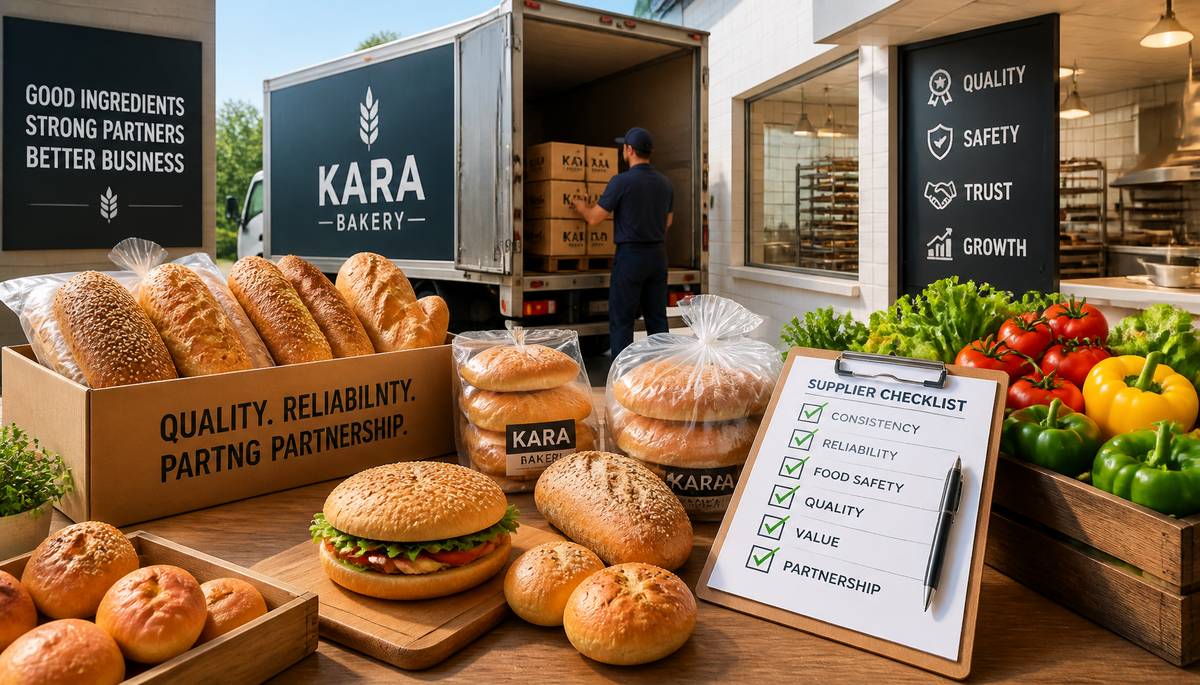 Choosing the right food supplier is one of the most important operational decisions any food-based business will make. Whether you run a café, restaurant, catering company, hotel kitchen, school canteen, or quick service outlet, your supplier influences everything from quality and consistency to margins and customer satisfaction.
A supplier is not simply a source of ingredients. They are a strategic partner in your daily operations. Selecting the right one requires clarity about your business model, your growth plans, and the experience you want to deliver to customers.
Here is how to approach the decision with confidence.
Understand Your Business Model First
Before comparing suppliers, take a close look at your own operation.
Are you a high-volume outlet focused on speed and efficiency?
Are you a premium restaurant prioritizing artisan quality?
Are you a multi-site chain requiring standardized products across locations?
Each model demands different supplier strengths.
A busy café may prioritize reliable delivery schedules and consistent baked goods. A catering business might require flexible order volumes and rapid turnaround. A growing franchise will need suppliers who can scale with demand.
Your supplier choice should align with how your business actually operates, not just what looks impressive on paper.
Prioritize Consistency Over Novelty
Creativity and product variety are valuable, but consistency is essential. Customers return because they know what to expect. If your bread, buns, or bakery products vary in size, taste, or quality, it directly affects your brand perception.
Established suppliers such as Kara Bakery focus on delivering dependable products that meet professional standards at scale. For many food businesses, that consistency is more valuable than constant novelty.
Reliability builds trust with both customers and internal teams.
Evaluate Supply Chain Reliability
Missed deliveries can disrupt service, reduce revenue, and damage reputation. When assessing suppliers, consider:
- Delivery frequency and flexibility
- Geographic coverage
- Contingency planning
- Stock availability during peak seasons
Ask about their infrastructure. Do they have established logistics systems? Can they handle sudden increases in demand? Do they operate regionally or nationally?
A supplier that performs well during normal periods but struggles under pressure creates operational risk.
Assess Product Range and Specialization
Different business types require different product portfolios.
Quick service restaurants may need standardized burger buns or sandwich rolls in high volumes. Boutique cafés may look for specific textures or formats that suit premium presentation. Catering companies often require products that hold well during transport and service.
Choose a supplier whose core offering aligns with your main revenue drivers. Depth in a relevant category is often more valuable than a broad but shallow range.
Consider Food Safety and Compliance
Food safety is non-negotiable. Suppliers must meet rigorous industry standards and maintain transparent quality control systems.
Review certifications, audit history, allergen management practices, and traceability procedures. In regulated environments such as schools, hospitals, and large-scale catering operations, compliance is critical.
Strong compliance systems protect your business from costly disruptions.
Examine Cost Structure Beyond Unit Price
Price matters, but focusing only on the lowest cost per unit can be short-sighted. Consider the total value instead.
Reliable suppliers reduce waste. Consistent products lower the risk of rejected batches. Stable pricing improves forecasting. Efficient packaging may reduce storage needs.
Sometimes paying slightly more for a dependable supplier results in better long-term margins and fewer operational headaches.
Look for Long-Term Partnership Potential
The best supplier relationships evolve into partnerships. As your business grows, your needs will change. A strong supplier should be able to scale alongside you, offer new product innovations when appropriate, and support operational expansion.
Ask about their capacity for growth. Have they worked with multi-site operators? Can they adapt to new formats or product specifications?
A forward-looking supplier becomes part of your growth strategy.
Seek Transparency and Communication
Operational success relies on clear communication. Your supplier should provide straightforward ordering processes, accessible customer support, and proactive updates if issues arise.
Transparency builds trust. When challenges occur, a responsive partner makes problem-solving faster and less stressful.
Final Thoughts
Choosing the right food supplier is not just about sourcing ingredients. It is about strengthening the foundation of your business. The right partner supports consistency, protects margins, reduces operational stress, and allows you to focus on serving customers.
By aligning supplier strengths with your business type, prioritizing reliability, and thinking long term, you create a supply chain that works with you rather than against you.
In food service, operational success often begins long before the kitchen opens. It begins with the supplier you choose.
|
|

