What Makes an Industrial Site Easier and Safer to Navigate?
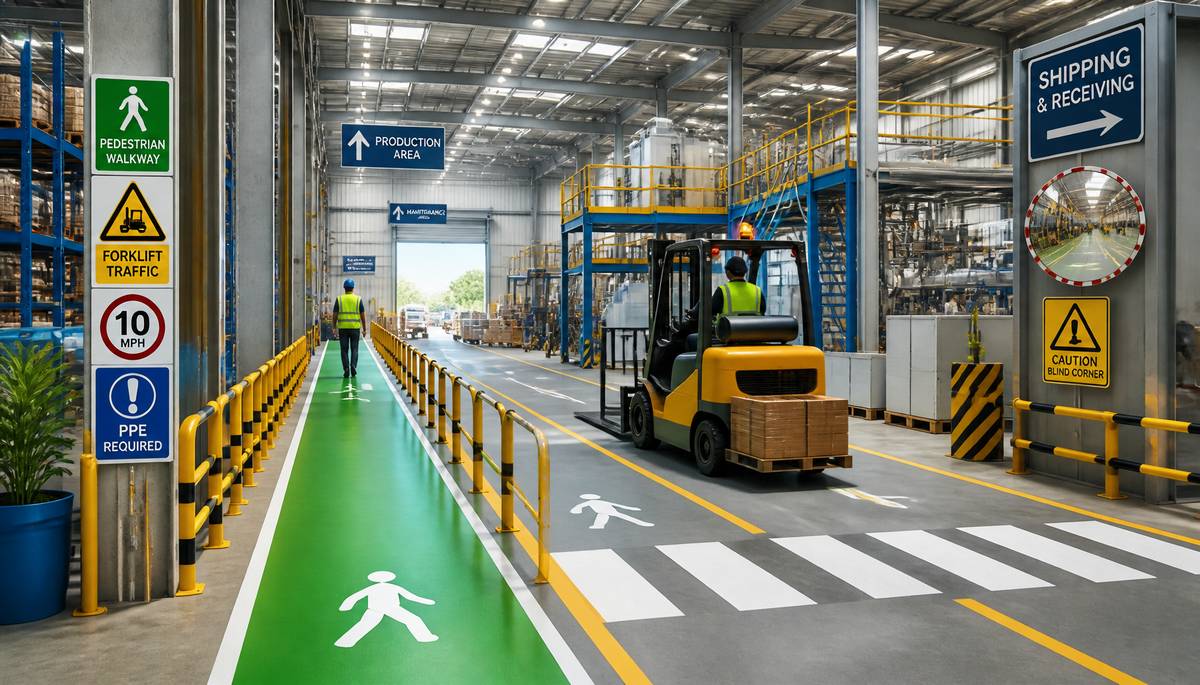 Industrial sites can be busy, complex environments. Warehouses, factories, processing plants and other facilities may have employees, contractors, vehicles and machinery moving through the same space throughout the day. Without thoughtful organisation, even routine journeys around the site can become more difficult and potentially more hazardous than they need to be.
Making an industrial site easier to navigate is therefore about more than convenience. Good design can support safer working practices, improve efficiency and help everyone understand how to move around the premises confidently.
Clear Routes Through the Site
One of the most important considerations is creating obvious routes for both pedestrians and vehicles. Where possible, walkways should be clearly separated from forklift routes, delivery areas and other spaces used by moving machinery.
Floor markings, barriers and designated crossing points can all make these boundaries easier to understand. Keeping routes consistent throughout the site also helps employees develop safer habits rather than having to work out where they should walk each time they enter a different area.
It is equally important to keep these routes clear. Materials, pallets, tools and equipment should not be left in designated walkways, particularly around corners, doorways or emergency exits.
Signage That Communicates Quickly
People working in industrial environments often need to process information quickly. Clear signage can help them identify hazards, locate equipment and understand where particular routes or restricted areas begin.
Well-positioned industrial signage can be used to identify everything from machinery and storage zones to safety instructions, access points and directional information. Signs should be easy to read, positioned where they will naturally be seen and designed so that the most important information can be understood at a glance.
Consistency matters too. Using similar colours, symbols and terminology across a facility makes it much easier for people to recognise what different signs mean.
Good Lighting and Visibility
Poor visibility can turn an otherwise manageable area into a safety risk. Industrial sites should provide suitable lighting in walkways, stairwells, loading areas and around machinery, particularly where employees work during early mornings, evenings or overnight shifts.
Sightlines should also be considered. Tall storage, equipment or temporary materials can obscure approaching vehicles or pedestrians. Convex mirrors, warning lights or additional crossing controls may be useful around blind corners and busy junctions.
Logical Layouts
The easier a site's layout is to understand, the less unnecessary movement people need to make. Frequently used equipment, storage areas and workstations should be positioned logically wherever practical.
A well-planned layout can reduce employees crossing vehicle routes unnecessarily or walking long distances between connected tasks. It may also improve productivity by making everyday processes more straightforward.
Regular Reviews
Industrial sites rarely remain unchanged. New machinery arrives, storage requirements grow and working practices evolve. A layout that worked well several years ago may no longer be suitable.
Regular safety inspections provide an opportunity to identify confusing routes, damaged markings, outdated signs or newly created hazards. Employee feedback can also be extremely useful, as the people who move around the site every day are often the first to notice problem areas.
Ultimately, an industrial site is easier and safer to navigate when its layout communicates clearly. Defined routes, effective signage, good visibility and regular reviews can make movement more predictable, helping people get where they need to go while reducing avoidable risks.
|
|

