Why Does That Door Suddenly Stick? What Seasonal Movement Can Do to Doors and Frames
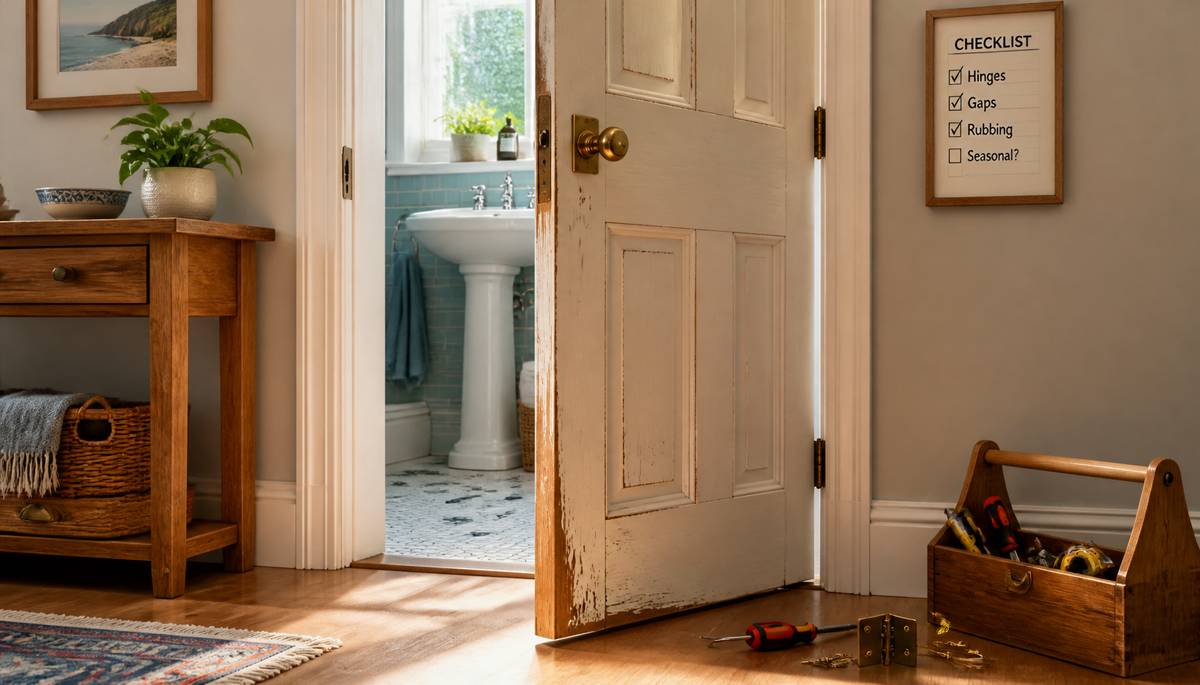 A door can spend years performing its one modest duty without complaint, then wake up one damp Tuesday and decide that closing is now a negotiation. It catches against the frame, scrapes the floor, needs an extra shove or produces the sort of creak normally associated with abandoned mansions. Before reaching for a plane, screwdriver or strongly worded letter to the manufacturer, it is worth considering one of the most common causes: seasonal movement.
Doors and their frames are not completely static objects. Timber in particular responds to changes in its surroundings, absorbing and releasing moisture as humidity rises and falls. Even manufactured doors containing timber products can experience small dimensional changes. Usually these movements are tiny, but a door only needs to gain a millimetre or two in an inconvenient place before its previously generous clearance becomes considerably less generous.
Humidity Can Turn a Good Door Bad
Wood is hygroscopic, meaning it exchanges moisture with the surrounding air. During humid periods, its moisture content can increase and the material may swell. When conditions become drier, it can contract again.
This explains why a door that closes perfectly during one part of the year might rub against its frame during another. Bathrooms, kitchens and poorly ventilated rooms can be particularly susceptible because moisture levels may fluctuate considerably. A door beside a frequently steamed-up bathroom has, environmentally speaking, been given a rather more exciting life than the cupboard door under the stairs.
Look carefully at where the door is catching. If there is a small, consistent area of rubbing along an edge and the problem appeared during particularly humid weather, swelling is a plausible explanation. Paint may become polished, scratched or slightly discoloured at the contact point, conveniently leaving evidence of the dispute.
Temperature Plays Its Part Too
Temperature changes can also affect doors, frames and the surrounding materials. Heating a house during colder months changes both temperature and relative humidity. Timber may dry and contract, while different materials within the building expand and contract at different rates.
These changes do not necessarily mean anything is wrong. Houses are assembled from materials that respond differently to environmental conditions, and small amounts of movement are normal. A tiny seasonal shift that would be irrelevant across an entire wall can become noticeable around a door because the tolerances between door and frame are comparatively narrow.
Older properties can make this even more obvious. Their doors and frames may already have accumulated decades of minor adjustments, layers of paint and small changes in alignment. Add another coat of gloss to a door with only a slender clearance and suddenly the door has effectively been asked to squeeze into trousers it bought twenty years ago.
Check the Hinges Before Blaming the Weather
Not every seasonal-looking problem is actually caused by the season. Loose hinges are an extremely common reason for doors beginning to drag or catch. Screws can gradually loosen, allowing the door to drop slightly within the opening.
Open the door and gently lift it by the handle. Noticeable movement around the hinges can indicate looseness. Check whether screws are secure and examine the hinges for obvious wear or damage. A door that catches near the upper corner on the handle side may simply have dropped slightly rather than expanded dramatically overnight.
The gaps around the closed door can also reveal useful information. Ideally, they should appear reasonably even. A gap that becomes noticeably narrower toward one corner suggests an alignment issue worth investigating. This simple visual inspection often tells you more than repeatedly opening and closing the door while staring at it accusingly.
When a Sticky Door Deserves More Attention
A single door becoming slightly tight during humid weather is usually very different from several doors suddenly becoming difficult to close. The wider pattern matters.
If sticking is accompanied by new cracks around frames, visibly distorted openings, significant changes in floor level or several doors and windows developing alignment problems around the same time, further investigation is sensible. These symptoms do not automatically indicate a serious structural problem, but they provide more reason to consider movement beyond ordinary seasonal swelling.
Changes that continue to worsen regardless of the weather are also more significant than a door that predictably tightens during humid months and loosens again when conditions become drier. Monitoring when the problem appears, where the door catches and whether nearby surfaces are changing can help distinguish an irritating seasonal habit from something requiring professional assessment.
Resist the Temptation to Start Shaving Wood Away
When a door sticks, the immediate temptation is often to remove whatever appears to be getting in the way. Out comes the plane or sandpaper, and a few minutes later the offending edge has been reduced. Sometimes that is exactly the right solution. Sometimes it creates a beautifully fitting door in August and an impressive draught channel by February.
If seasonal swelling seems likely, it can be worth observing the door before making permanent alterations. Consider whether the problem appeared suddenly alongside unusually humid conditions and whether the door has behaved similarly in previous years. Improving ventilation or reducing excessive indoor humidity may help without requiring any carpentry at all.
Where only a very small adjustment is needed and the cause is understood, careful sanding or planing may provide a lasting solution. Any exposed timber should normally be resealed afterwards, since leaving a freshly cut edge unprotected can allow moisture to enter more readily. Removing large amounts of material to solve an unexplained problem, however, is rarely the best opening move.
Paint Can Be Part of the Problem
Repeated decorating can quietly reduce the clearance around a door. One coat of paint is insignificant, but numerous coats applied to both the door and frame can eventually make an already narrow gap narrower still. Older hinges may also have several generations of paint sitting around them, occasionally preventing them from operating exactly as intended.
Check the areas where rubbing occurs for unusually thick paint, ridges or previous repairs. If the underlying door appears correctly aligned but painted surfaces are making contact, addressing the finish may be more appropriate than altering the timber itself.
There is also little benefit in enthusiastically painting over a sticking door and hoping the fresh colour will improve its attitude. It will look smarter while refusing to close.
Watch for Changes Beyond the Door
More substantial movement usually provides clues elsewhere. Cracks appearing around the corners of openings, separation between frames and walls, uneven floors or doors that have become visibly skewed deserve closer attention, particularly when the changes are new or progressing.
Buildings naturally experience some movement over time, and minor cracking does not automatically indicate structural trouble. Nevertheless, persistent or developing changes should not simply be corrected cosmetically without considering their cause. A door frame that has changed shape because the surrounding structure is moving will not necessarily be fixed by repeatedly trimming the door to match it.
If several openings are affected, cracks are widening, or a frame appears noticeably distorted, advice from an appropriately qualified building professional can help establish what is happening. The objective is not to assume the worst, but to avoid treating a symptom while overlooking the underlying reason.
Getting Back Into the Swing of Things
Most suddenly stubborn internal doors have fairly ordinary explanations. Moisture, temperature, loose hinges, accumulated paint and tiny alignment changes can all turn a previously obedient door into something requiring an unnecessary shoulder charge.
Start with observation rather than alteration. Check exactly where the door touches, inspect the hinges, compare the gaps around the frame and consider whether recent weather or indoor humidity has changed. If the problem comes and goes with the seasons and remains minor, the building may simply be responding normally to its environment.
A door that progressively changes shape, becomes dramatically misaligned or joins several other doors in suddenly misbehaving deserves more investigation. The useful distinction is between a door moving slightly within an otherwise stable opening and the opening itself changing.
Once that distinction is understood, the solution is usually much clearer. Sometimes it is a screwdriver, sometimes a little careful sanding, and occasionally it is professional advice. Either way, it beats spending six months developing an elaborate closing technique involving one hip, two hands and a short run-up.
|
|

