Why Scottish Tenement Flats Can Have Plumbing Problems That Modern Homes Rarely Experience
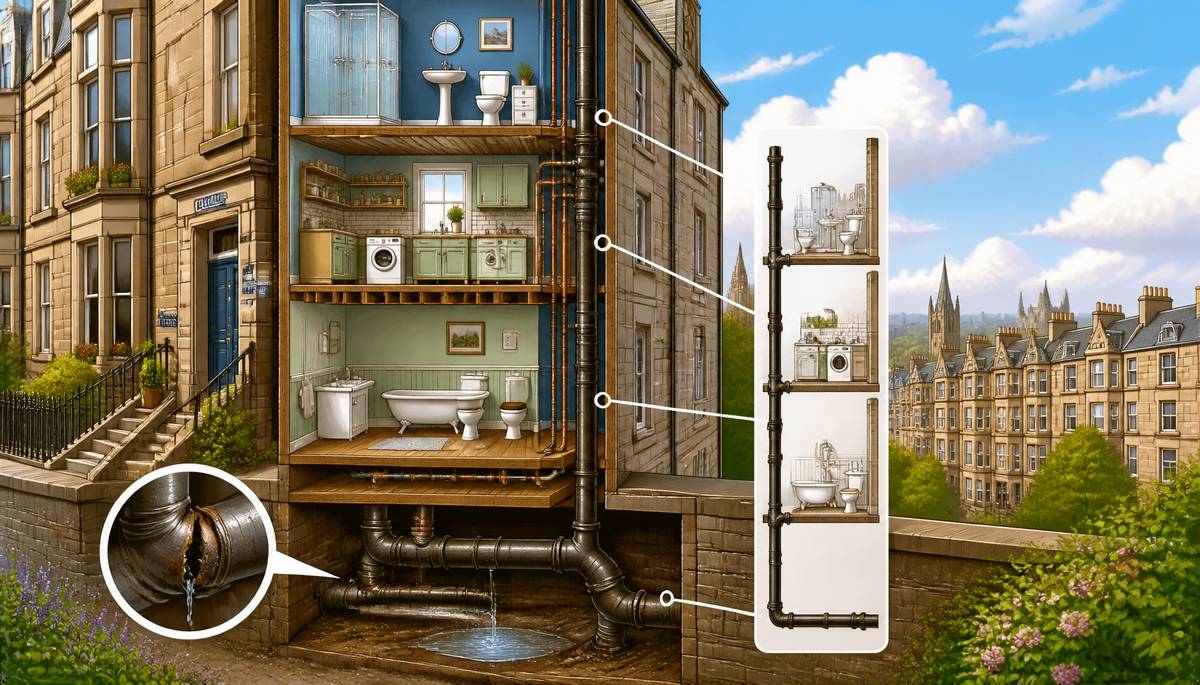 A mysterious puddle appearing beneath a Victorian floorboard may have begun its journey three storeys above, travelled through a century-old pipe and taken a scenic detour behind somebody else's kitchen. Welcome to the peculiar world of Scottish tenement plumbing, where the architecture is magnificent, the ceilings are enormous and the drainage arrangements occasionally resemble an archaeological investigation.
Traditional tenements remain a defining feature of cities such as Glasgow, Edinburgh, Dundee and Aberdeen. Built largely during the nineteenth and early twentieth centuries, these buildings were designed for an entirely different era of domestic water consumption. Modern bathrooms, washing machines, dishwashers and powerful showers have subsequently been introduced into properties whose original plumbing arrangements were never intended to accommodate them.
When Several Households Share the Same Pipes
Unlike most modern detached houses, tenement flats frequently depend on communal plumbing infrastructure. Vertical drainage stacks may serve several properties, while shared supply pipes can pass through walls, floors and inaccessible service spaces.
This creates an unusual problem: a plumbing fault affecting one household may originate somewhere entirely different.
A blockage in a communal waste stack, for example, might cause wastewater to back up into a ground-floor flat even though the obstruction originated several floors above. The unfortunate resident downstairs may discover that their bathroom has become the building's unofficial collection point.
Older drainage systems can also contain cast-iron pipes that have gradually deteriorated through corrosion. Joints may weaken, internal surfaces become rough and accumulated deposits restrict the movement of wastewater.
Recognising whether a problem affects an individual branch pipe or a communal stack is therefore essential before arranging expensive repairs.
The Curious Case of Unequal Water Pressure
Water pressure can vary considerably between floors in older tenement buildings. Residents on lower levels may enjoy satisfactory pressure while neighbours upstairs struggle to produce anything resembling a respectable shower.
Height naturally reduces available pressure, but ageing supply pipes, partially closed valves, internal corrosion and outdated plumbing alterations can make matters worse.
Some properties have also undergone multiple bathroom and kitchen renovations, leaving behind a confusing assortment of pipe diameters, fittings and connections.
A shower installed in a fourth-floor flat might look spectacular in the showroom yet perform like a reluctant watering can once connected to an inadequate supply.
Before installing high-demand appliances or modern shower systems, residents should have their available water pressure and flow rate assessed. This helps prevent expensive purchases that the existing infrastructure cannot adequately support.
Hidden Pipework and Awkward Access
Thick masonry walls, timber floors and elaborate plasterwork contribute enormously to the character of traditional tenements. Unfortunately, they can also make accessing concealed plumbing exceptionally difficult.
Pipes may run beneath original floorboards, behind decorative finishes or through neighbouring properties. Locating a leak sometimes requires investigating several possible routes before identifying its actual source.
Unnecessary demolition should always be avoided, particularly where historic architectural features could be damaged.
Moisture meters, thermal imaging and carefully targeted inspections can help narrow down the location of concealed leaks, although no single technique provides a guaranteed diagnosis.
The objective is to identify the problem with the least possible disruption, rather than dismantling half the building in pursuit of one suspicious drip.
Recognising Trouble Before It Spreads
Tenement plumbing problems rarely announce themselves with helpful written notices. Instead, residents must watch for subtle changes that suggest something is deteriorating behind the scenes.
Recurring damp patches, unexplained increases in water consumption, persistent drainage smells and gurgling sounds from waste pipes can all indicate developing problems. Water stains appearing on ceilings deserve particular attention, especially when they grow after neighbouring bathrooms have been used.
Slow drainage affecting several flats may suggest a communal obstruction rather than an isolated blockage. Similarly, reduced water pressure across multiple properties could indicate a problem with shared supply infrastructure.
Residents should photograph suspicious damage, record when symptoms occur and communicate with neighbours. Establishing a timeline can help plumbers identify patterns that might otherwise remain invisible.
Who Actually Pays for Communal Repairs?
Determining responsibility for plumbing repairs can be considerably more complicated than fixing the fault itself.
Scottish tenements commonly operate under shared maintenance arrangements, with responsibilities established through property title deeds and applicable legislation, including the Tenements (Scotland) Act 2004.
Generally, pipework serving only one flat may be the responsibility of that property's owner, while communal systems serving multiple properties can involve shared maintenance obligations. However, the precise position depends on the ownership arrangements, title conditions and nature of the affected installation.
The Tenement Management Scheme may provide default rules where title deeds are silent or inadequate, but it does not automatically make every plumbing repair a shared expense.
Before commissioning substantial work, owners should establish whether the affected installation is private or communal, examine their title deeds and consult the property's factor where applicable.
Obtaining written quotations and communicating proposed expenditure can prevent disagreements from escalating into expensive disputes.
Nobody particularly wants to spend Christmas arguing with six neighbours about the ownership of a rusty elbow joint.
Keeping the Peace and the Water Flowing
Preventative maintenance is especially valuable in buildings where plumbing systems have survived several generations of occupants.
Communal drainage inspections, prompt investigation of recurring leaks and sensible coordination between neighbouring flats can reduce the likelihood of major failures. Residents should also avoid flushing wipes, sanitary products or other materials that can obstruct ageing drainage systems.
Where extensive renovation is planned, discussing potential effects on shared pipes before work begins can save considerable trouble afterwards.
Modernising an individual bathroom without considering the wider building's infrastructure may simply transfer existing problems elsewhere.
Ultimately, traditional Scottish tenements offer architectural character that modern developments often struggle to reproduce. Their plumbing, however, demands a little more cooperation, investigation and foresight.
A well-maintained communal system protects individual homes, preserves historic interiors and reduces the chances of an unexpected indoor waterfall becoming the building's latest shared amenity.
|
|

