The Potential Energy Savings Thanks To New Windows
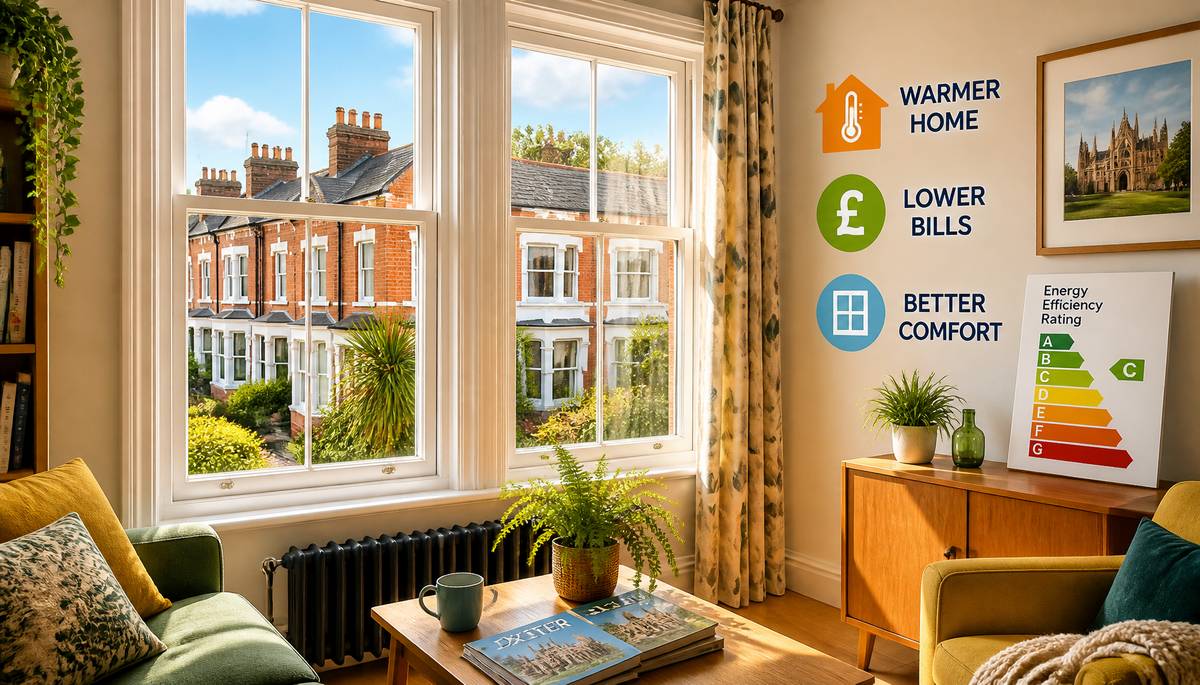
Exeter: A Case Study
Energy bills have been on the mind of just about every Exeter homeowner since 2022, and windows keep coming up in the conversation. Are new ones genuinely worth it for the savings, or is it more of a nice-to-have? Honestly, it depends what you're starting from. If you've got a Victorian terrace with its original single-glazed sashes, new glazing makes a real dent. If you already have half-decent double glazing, the sums get a lot tighter. Here's what the numbers actually look like across Exeter's housing stock.
What Windows Really Do to Heat Loss
Heat loss through a building's shell is measured as a U-value, and the lower the number, the better the insulation. Single glazing comes in around 5.0 - 5.8 W/m²K. A-rated double glazing sits nearer 1.2 - 1.4. That's roughly 75% less heat escaping through the glass, and you feel it straight away - no more cold draught tumbling off the pane when you sit by the window in January, and far less condensation misting it up overnight.
Windows account for somewhere around 18 - 25% of a home's total heat loss. That's meaningful, but it isn't the main event - walls, roofs, and floors together lose more. New windows on their own won't rebuild your energy bill, but they'll shift it. The bigger the glazed area and the worse your starting point, the more they shift it.
Exeter's prevailing south-westerlies don't help. Atlantic air rolls in carrying plenty of moisture and drags night-time temperatures down all winter, so poorly sealed or single-glazed windows on the south-west face of a house here haemorrhage heat on an exposed night far quicker than they would on a sheltered home somewhere drier.
The Real-World Savings for Exeter Homes
The Energy Saving Trust puts numbers on the annual saving from swapping single glazing for A-rated double glazing. For a semi, that's roughly £110 - £165 a year. For a detached house, £165 - £235. Those figures assume typical UK gas prices and a standard window count - your actual saving hangs on how many windows you replace, the gas price at the time, and how you live in the place.
Exeter's Victorian terraces - often 3 to 4-bed mid-terraces with 8 to 12 single-glazed sashes - sit realistically at the top of that semi-detached range for a full replacement. Call it £130 - £160 a year, or somewhere around £3,000 - £4,000 over 20 years. Weigh that against the cost of a full replacement, which might be £6,000 - £10,000 on a Victorian terrace with original sashes, and the payback on energy savings alone typically lands at 15 - 30 years.
Nobody replaces their windows purely for the energy payback, and the people who try to pin it down to the penny usually end up talking themselves out of a decision that's actually right for them. Comfort, no more condensation, fewer draughts, better security, kerb appeal - those land immediately, not drip-fed over decades. The energy saving is real and it keeps coming, but it's one slice of a bigger pie.
Going From Old Double Glazing to New
A big chunk of Exeter's housing has double glazing that went in during the 1990s or early 2000s. When it was fitted it was a serious step up from single glass, but it's aged in two ways. Plenty of those older sealed units have failed - the edge seal has broken down, the insulating gas has leaked out, and the unit is now behaving more like single glazing than double. And even where the units are still intact, the original frames and glass specification were a good deal less efficient than today's A-rated units.
An older double-glazed unit in good condition, with no seal failure, has a U-value around 2.8 - 3.0 W/m²K. A current A-rated unit sits at 1.2 - 1.4. That's a real gap, just a smaller one than single-to-double. The Energy Saving Trust reckons on roughly £30 - £70 a year for swapping older double glazing for new A-rated units in a semi, depending on how old the existing glazing is and how many windows you're doing.
Units that have actually failed - misted up, condensation trapped between the panes - are a different story, because they're performing far worse than their nominal U-value would suggest. If 30 - 40% of a property's sealed units have gone, the real heat loss through those windows is well above the headline figure. In a lot of cases our window repairs service can swap just the failed sealed units, which is cheaper than replacing whole frames and knocks out the worst offenders without you redoing the lot.
What New Windows Do to Your EPC in Exeter
You need an Energy Performance Certificate to sell or let a home in England. The current floor for a rented property is EPC E; the government has consulted on lifting that to EPC C for new tenancies, though the timeline keeps stretching. If you're a landlord sitting at E or below, windows are one of the more practical improvements on the table.
Going from single glazing to A-rated double typically nudges an EPC up by one or two bands. For a Victorian Exeter terrace currently at E with original single glazing, a full window replacement paired with loft insulation, if that's not already sorted, will often move it to D, sometimes C. That comes down to how the SAP calculation behind an EPC scores window ratings - A-rated units score a lot better than single glazing or tired older double glazing.
Worth knowing: the assessor scores your windows on what they see and the rated efficiency, not on your actual bills. So if you've had a recent EPC and have since replaced the windows, ask for a reassessment. The improvement should show up on the new certificate, which matters both for rental compliance and for buyer confidence at sale. Landlords picking their way through the rules will find the current minimum EPC requirements and the exemptions for listed buildings and some older properties set out on GOV.UK.
The Draught and Comfort Factor - Harder to Measure, Very Real
Those saving figures capture heat conducted through the glass, but they don't fully catch air leaking in. Old timber sashes, even ones that look fine, often have little gaps around the meeting rail, between the sash and the frame, and at the pulley boxes that once held the sash weights. Every one of those is a route for cold air into the room.
Draught-proofing an existing sash tackles some of it, but a replacement window shuts it down completely. The difference in how warm a Victorian front room feels once the draughty sashes are gone - before you've even touched the thermostat - is usually more noticeable than the bill saving implies. The room just holds its heat, which often means people run the heating less in there or dial it down a notch, and that change in habit is a big part of what drives the real-world saving.
In Exeter's Victorian terraces, where the front reception room has original sashes on the bay and the side wall, draught infiltration has often been the main way heat escapes - not conduction through the glass at all. A good installer will size this up on a site visit and give you a straight picture of what to expect.
Weighing the Whole Decision
For a home with original single glazing or failed older double glazing, the case is clear enough: the comfort and the end of condensation land straight away, and the energy saving stacks up over time. The pure payback on energy alone is long for most properties. That's just how it is.
What actually swings the decision is how long you're planning to stay, what it'd cost to keep the old windows serviceable - old timber sashes want repainting and draught-proofing every few years - and what buyers make of the place when they walk up to it. A house with obviously tired or failing glazing is harder to sell at full value. Any estate agent will tell you as much, and plenty of sellers learn it the hard way.
If you're a landlord chasing an EPC threshold, the maths is simpler. If you're a homeowner settling in for 10-plus years, comfort, bills, and property value together usually make well-specified new windows the obvious move. For a free assessment of what your particular Exeter property would gain from - full replacement, unit-only repair on failed sealed units, or something in between - contact our team for a site visit.
|
|

