What Happens to a Roof During a British Storm?
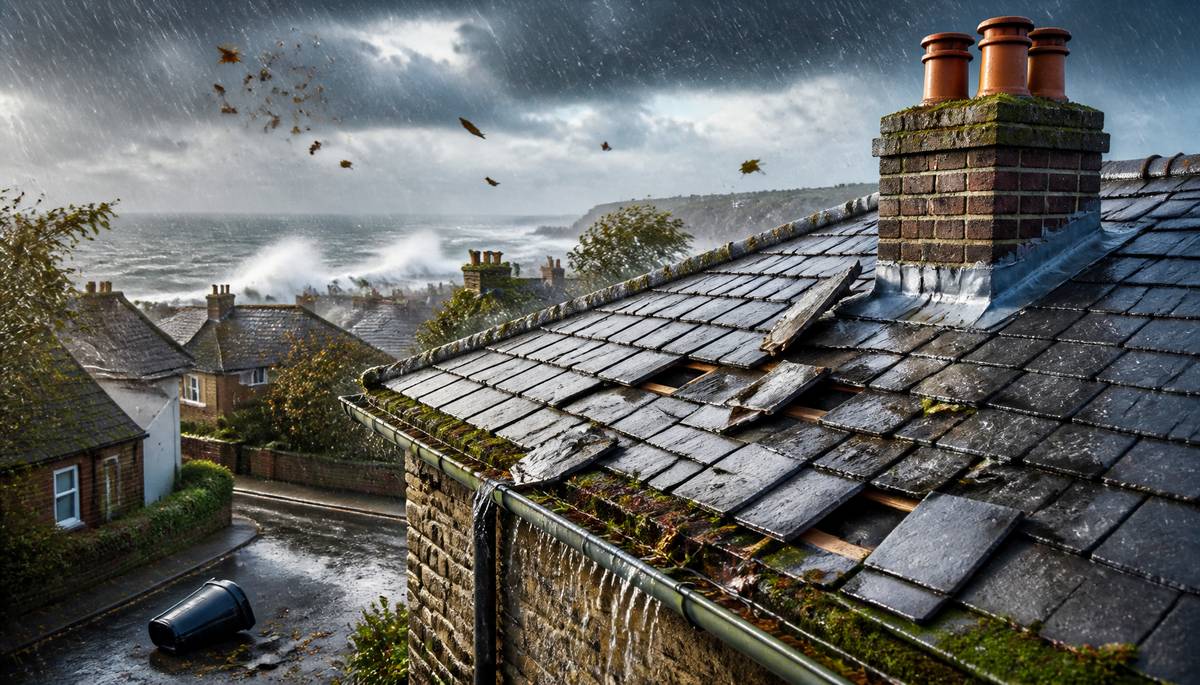 A roof can spend months looking perfectly content, then one particularly determined Atlantic weather system arrives and starts testing every tile, joint and fixing as though it has been hired as a very aggressive building inspector.
British storms rarely attack a roof with just one problem. Wind, rain and sudden pressure changes work together, pushing water into places it would never normally reach and placing repeated loads on materials that may already have spent decades outdoors. A roof that appears completely sound in ordinary rain can therefore reveal weaknesses surprisingly quickly once the weather turns rough.
Wind Does More Than Blow Things Around
Strong winds create pressure differences across a roof. Air striking one side of a building is forced upwards and over the ridge, while lower pressure can develop above and behind sections of the roof. This can produce an upward pulling force on tiles and slates rather than simply pushing against them.
A properly fixed tile should tolerate considerable wind, but loose nails, ageing clips or slightly displaced tiles may begin moving. Repeated lifting and dropping can gradually worsen the problem. Sometimes the tile disappears completely, presumably beginning an exciting new career somewhere in the neighbour's garden.
Roof edges, ridges and corners are particularly exposed because wind speeds and turbulence can be greater around these areas. Ridge tiles with deteriorating mortar or failing mechanical fixings may therefore become noticeable after severe weather.
Rain Starts Travelling Sideways
Ordinary rainfall mostly moves downwards, which roofs are rather conveniently designed to handle. Storm rain is less cooperative. Strong winds can drive water horizontally beneath overlapping tiles, around flashing and through tiny gaps that remain completely dry during calmer conditions.
Lead flashing around chimneys, roof valleys and adjoining walls is especially important during these periods. A small crack, lifted edge or failed seal may allow wind-driven rain behind the roof covering. The resulting damp patch indoors can appear some distance from the actual entry point because water may travel along rafters, felt or other surfaces before becoming visible.
Chimneys Face the Weather Head-On
Chimneys are among the most exposed structures on a house. During storms, masonry, pointing, chimney pots and flashing all experience substantial wind and rain.
Cracked mortar joints can absorb water, while loose pots or damaged flashing may become increasingly vulnerable. Any obvious movement, fresh debris around the property or missing sections of mortar should be treated seriously after a major storm. A leaning chimney is not displaying personality; it needs professional attention.
Gutters Have a Very Busy Evening
Heavy rainfall can overwhelm guttering surprisingly quickly, particularly when leaves, moss and other debris have already reduced its capacity. Water may spill over the front, run down exterior walls or collect behind the gutter. Strong winds can also loosen brackets and alter the gutter's alignment, creating sections where water pools instead of flowing towards the downpipe.
Once conditions are safe, homeowners can inspect gutters from ground level for sagging sections, overflowing water marks and displaced downpipes. Finding a collection of moss beneath the roof can also indicate that material has been washed or blown from above. The gutter occasionally doubles as a botanical garden, but this is rarely desirable.
Flat Roofs Deal With a Different Battle
Flat roofing does not experience storm conditions in quite the same way as a pitched tiled roof. Wind can place considerable stress on edges, seams and coverings, while intense rainfall tests drainage outlets and any areas where water naturally collects.
Small cracks, bubbles or weakened seams may remain unnoticed during ordinary weather but become significant when water sits on the surface for prolonged periods. Blocked outlets can make matters worse by allowing unusually deep standing water to develop. Because water is heavy, substantial pooling creates an additional load that the roof was not intended to carry indefinitely.
After a storm, visible ponding that remains long after rainfall has stopped deserves investigation, particularly if it is accompanied by staining or dampness inside the property.
Why Small Weaknesses Suddenly Become Obvious
Storms do not necessarily create roof defects from scratch. Often, they expose problems that were already developing. A slightly loose tile, ageing section of flashing or partially blocked gutter may function adequately for months because normal weather never pushes it beyond its limits.
Severe weather changes that equation. Repeated gusts move loose materials, wind-driven rain finds narrow openings and large volumes of water test drainage systems simultaneously. What appears to be sudden storm damage may therefore be the final stage of gradual deterioration.
After the Storm Comes the Roof Reckoning
Once the weather has settled, homeowners should resist the temptation to climb onto the roof themselves. A ground-level inspection can reveal missing or displaced tiles, damaged ridge sections, leaning guttering, fallen masonry and debris. Binoculars can provide a closer look without turning roof maintenance into an unscheduled adventure involving the emergency services.
Inside the property, loft spaces and upper rooms should be checked for fresh staining, damp insulation, dripping water or unusual smells. Particular attention should be given to areas around chimneys, valleys and roof penetrations.
Not every storm leaves expensive damage behind. Most well-maintained roofs simply endure the weather and continue doing their rather thankless job. But severe conditions provide a useful reminder that minor weaknesses rarely improve through neglect. Spotting a slipped tile, damaged flashing or struggling gutter soon after a storm can prevent a small repair from becoming a much larger one when the next Atlantic visitor comes knocking.
|
|

